
Merging JSON Objects: Shallow vs Deep
Quick answer: Merging combines two JSON objects into one. A shallow merge copies top-level keys, and on a conflict the second object wins — but it replaces nested objects wholesale. A deep merge recurses into nested objects so their sub-keys combine too. Pick the one that matches your intent; they differ only when values are themselves objects. Compare two documents side by side with the JSON Diff Viewer.
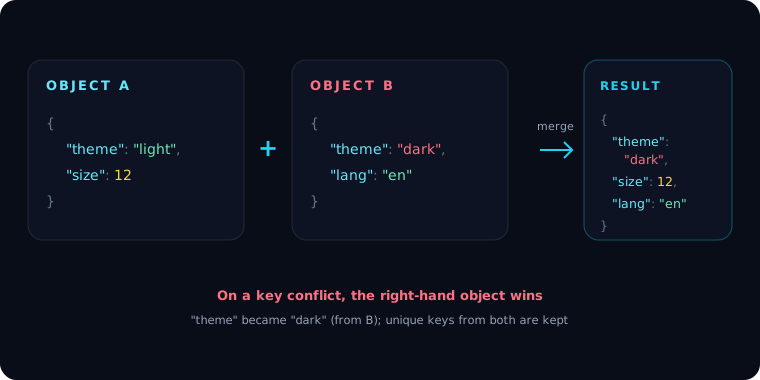
Shallow merge: right-hand side wins
A shallow merge takes the top-level keys of both objects. Where a key exists in both, the second object's value overwrites the first:
A = { "theme": "light", "size": 12 }
B = { "theme": "dark",  "lang": "en" }

merged = { "theme": "dark", "size": 12, "lang": "en" }
theme became "dark" (from B); size and lang are kept because each is unique. In JavaScript this is { ...A, ...B } or Object.assign({}, A, B).
Where shallow merge surprises people
Shallow merge replaces a nested object rather than blending it:
A = { "config": { "theme": "light", "size": 12 } }
B = { "config": { "theme": "dark" } }

shallow merged = { "config": { "theme": "dark" } }   // size is GONE
Because config exists in both, B's entire config object replaces A's — so size disappears. If you expected size to survive, you wanted a deep merge.
Deep merge: recurse into nested objects
A deep merge walks into nested objects and merges their keys too:
deep merged = { "config": { "theme": "dark", "size": 12 } }
size is preserved and theme is updated. A minimal recursive implementation:
function deepMerge(a, b) {
  const out = { ...a };
  for (const [k, v] of Object.entries(b)) {
    out[k] = (v && typeof v === "object" && !Array.isArray(v) &&
              out[k] && typeof out[k] === "object")
      ? deepMerge(out[k], v)
      : v;
  }
  return out;
}
The object spread ({ ...a, ...b }) is shallow only — it does not recurse, which is the single most common merge bug.
Arrays are the other decision
Neither approach has an obvious rule for arrays. When both objects have an array at the same key, do you replace, concatenate, or merge by index/id? Most deep-merge utilities replace by default; some concatenate. Decide explicitly, because "merge by id" (matching array elements on a key) is often what you actually want but rarely the default.
To see exactly what changed between two versions before or after merging, use the JSON Diff Viewer. For combining many records rather than two configs, see Comparing JSON Files.
Frequently asked questions
What's the difference between a shallow and deep merge? A shallow merge only combines top-level keys and replaces nested objects entirely. A deep merge recurses into nested objects so their sub-keys combine. They differ only when values are objects.
When two objects share a key, which value wins? By convention the second (right-hand) object wins, overwriting the first. Unique keys from both objects are kept.
Why did keys disappear when I merged with object spread?
The spread operator ({...a, ...b}) is a shallow merge — a nested object in b replaces the whole nested object in a, dropping keys that were only in a. Use a deep merge to preserve them.
How are arrays merged? There's no standard rule. Tools typically replace the array, but some concatenate, and "merge by id" is often what you want. Choose the behavior deliberately for your data.
Related tools
Related lessons